-171x57.png)
A Practical B2B Guide for Importers, Retailers & Brand Owners
In today’s highly competitive fabric care market, private label laundry products are no longer a niche strategy—they are a core growth engine for retailers, distributors, and emerging brands worldwide.
From laundry detergent liquids and pods to laundry sheets and scent boosters, private label allows buyers to control pricing, branding, and margins. However, many businesses underestimate the true relationship between MOQ, cost structure, and operational risk.
This guide breaks down what professional buyers need to understand before launching or scaling private label laundry products—and how experienced OEM/ODM manufacturers like IKEDA help mitigate those risks.
1. Why Private Label Laundry Products Are Growing Faster Than National Brands
Retail buyers are shifting away from national brands for three key reasons:
- Margin pressure from rising logistics and raw material costs
- Limited flexibility in fragrance, formulation, and packaging
- Growing consumer demand for differentiated and eco-conscious products
Private label laundry products allow buyers to:
- Improve gross margins by 15–40%
- Control fragrance positioning (premium, natural, hypoallergenic)
- Launch region-specific SKUs faster
However, these advantages only materialize when MOQ and cost structures are properly managed.
2. Understanding MOQ: More Than Just a Number
MOQ (Minimum Order Quantity) is often treated as a pricing lever, but in reality, it directly affects:
- Inventory risk
- Cash flow
- Speed-to-market
- Product testing flexibility
Common Industry Reality:
Many manufacturers quote low unit prices—but require MOQs that lock buyers into excess inventory.
For first-time private label buyers, oversized MOQs often result in:
- Slow-moving stock
- Limited ability to adjust fragrance or formulation
- Higher financial exposure during market testing
IKEDA’s approach:
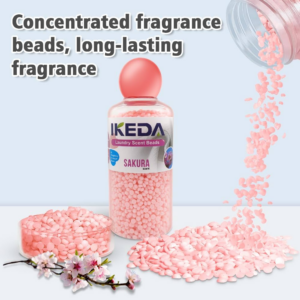
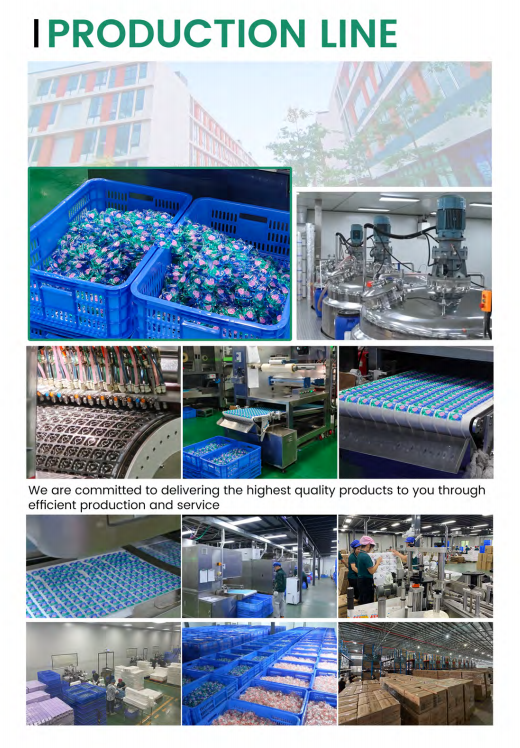
By offering flexible MOQs across laundry liquids, pods, sheets, and scent beads, IKEDA enables buyers to validate products before scaling—without sacrificing formulation stability or compliance.
This is where experienced OEM partners reduce risk—not just cost.

3. The Real Cost Structure Behind Private Label Laundry Products
Unit price alone is misleading. Professional buyers evaluate total landed cost, including:
- Raw materials (surfactants, enzymes, fragrance systems)
- Packaging components (bottles, films, cartons)
- Compliance documentation (EU/UK labeling, MSDS, IFRA)
- Shipping efficiency (volume, weight, concentration)
Cost-Per-Wash: The Metric That Actually Matters
Advanced buyers increasingly benchmark cost per wash, not cost per unit.
For example:
- Concentrated laundry pods may appear more expensive per piece
- But they reduce packaging volume, shipping costs, and dosage errors
This is why many distributors are shifting toward:
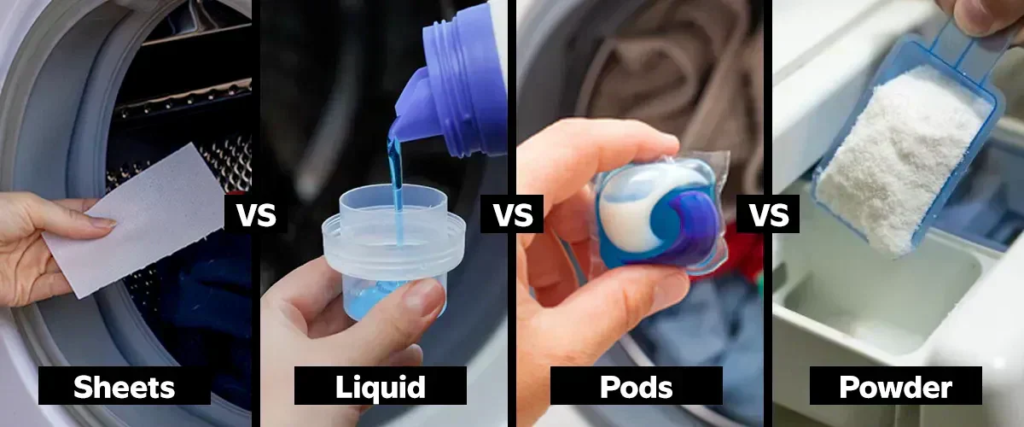
- Concentrated laundry pods
- Ultra-concentrated liquids
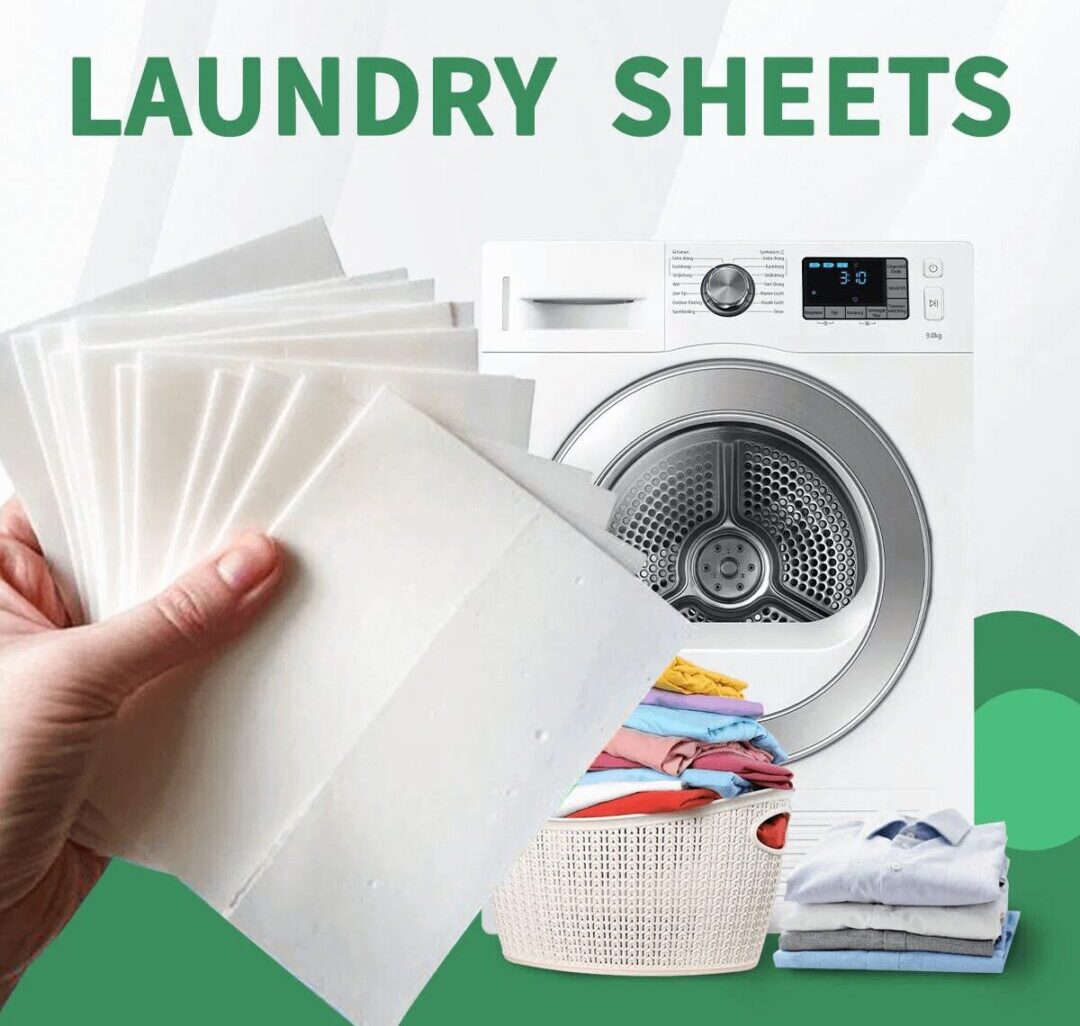
- Dissolvable laundry sheets
IKEDA actively supports this transition by optimizing formulations for higher actives per gram, improving both shipping efficiency and retail margins.
4. Hidden Risks in Private Label Laundry Manufacturing
Many private label projects fail—not because of pricing—but due to operational blind spots.
Key Risks Buyers Often Overlook:
1. Formulation instability
Low-cost formulations may separate, lose fragrance strength, or underperform in cold water.
2. Dissolution issues (pods & sheets)
Poor film quality or incorrect humidity control can cause incomplete dissolution—leading to consumer complaints.
3. Compliance failures
Incorrect labeling, fragrance restrictions, or missing documentation can delay customs clearance or block retail listings.
4. Over-customization at launch
Too many fragrances or SKUs increase complexity and inventory pressure.
IKEDA mitigates these risks through:
- Pre-tested base formulations
- Stable fragrance encapsulation systems
- Market-specific compliance support (EU, UK, Middle East)
5. OEM vs ODM: Choosing the Right Private Label Model
Not all private label buyers need full ODM development.
OEM (Faster, Lower Risk)
- Based on proven formulations
- Shorter lead times
- Ideal for distributors and wholesalers
ODM (Higher Differentiation)
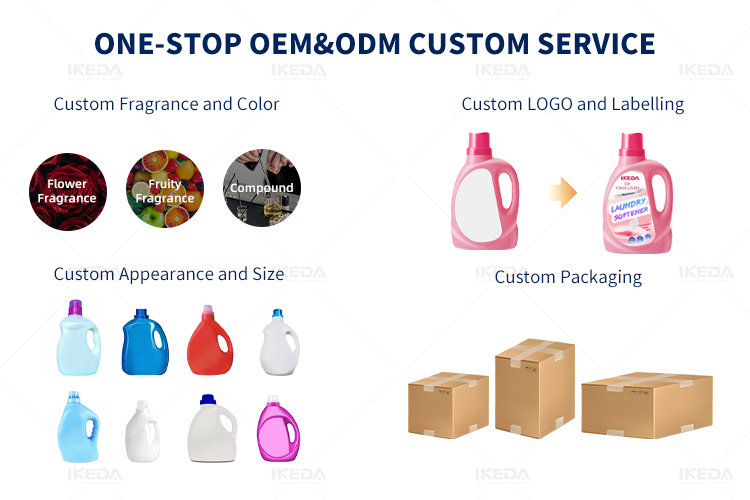
- Custom fragrance profiles
- Texture, color, or performance tuning
- Better suited for brand owners targeting premium positioning
IKEDA supports both models, allowing buyers to transition from OEM to ODM as volume and market confidence grow.
6. Scaling Without Increasing Risk
One of the biggest mistakes buyers make is assuming scale automatically improves profitability.
In reality, scale must be supported by:
- Stable supply chains
- Consistent quality control
- Predictable cost-per-wash metrics
By aligning MOQ strategy with scalable production planning, IKEDA enables buyers to:
- Expand SKU ranges gradually
- Maintain consistent fragrance performance
- Avoid requalification delays when scaling volumes
7. Why Long-Term OEM Partnerships Outperform Short-Term Cost Savings
The cheapest supplier rarely delivers the best long-term results.
Professional buyers prioritize:
- Process transparency
- Technical support
- Risk management capability
IKEDA positions itself not just as a manufacturer—but as a private label growth partner, supporting buyers from pilot production to multi-market expansion.
Conclusion: Private Label Success Is About Control, Not Just Price
Private label laundry products offer enormous opportunity—but only when MOQ, cost, and risk are managed strategically.
Buyers who succeed:
- Benchmark cost per wash, not unit price
- Start with flexible MOQs
- Partner with manufacturers who understand compliance, formulation, and logistics
With over two decades of experience in household cleaning product manufacturing, IKEDA helps global B2B buyers build scalable, compliant, and profitable private label laundry brands.